Terms
A workshop glossary.
English spellings vary — kikkō or kikko, shippō or shippo, shōji or shoji — and readings here are approximate.
- Asanoha 麻の葉
- Hemp-leaf filling. See asanoha.
- Byōbu 屏風
- Folding screen. Kumiko byōbu exist as exhibition objects (Takenaka / Sakae Tategu Kōgei, 2019).
- Fusuma 襖
- Opaque sliding partitions, papered both sides. Related fittings; not typically open kumiko.
- Goma 胡麻
- Sesame. A named hex-family filling. See goma / shippō.
- Goshi / kōshi 格子
- Lattice in the general architectural sense (windows, shopfronts, shōji gratings). Overlaps kumiko but is a broader word. Machiya kōshi is a street lattice, usually square, not a hemp-leaf filling.
- Hishi 菱
- Diamond / rhombus jigumi family in Yoshihara’s catalog.
- Hinoki 檜
- Chamaecyparis obtusa. See Materials.
- Jigumi 地組
- Base grid. Assembled before decorative fillers. Square, diamond, or triangular/hexagonal.
- Kaku-asanoha 角麻の葉
- Square hemp-leaf. 90° jigumi; different angle set from triangular asanoha.
- Kamoi 鴨居
- Head jamb / lintel with grooves for sliding fittings. Morse describes the deep double groove that lets shōji be lifted out.
- Kanna 鉋
- Japanese plane, used on the pull stroke. Primary tool for thicknessing strips and fitting cheeks.
- Kikkō 亀甲
- Tortoise-shell hexagon. See kikkō.
- Kumiko 組子
- Small assembled members; by extension the lattice craft. See What is kumiko.
- Masugata 桝形
- Square-measure jigumi family (Yoshihara).
- Mitsuke 見付
- Visible face width of a member. A dimension in King’s calculations.
- Mitsukude 三つ組手
- Three-way joint. See mitsukude.
- Nokogiri 鋸
- Japanese saw, typically pull-stroke. Used to rip and crosscut strips.
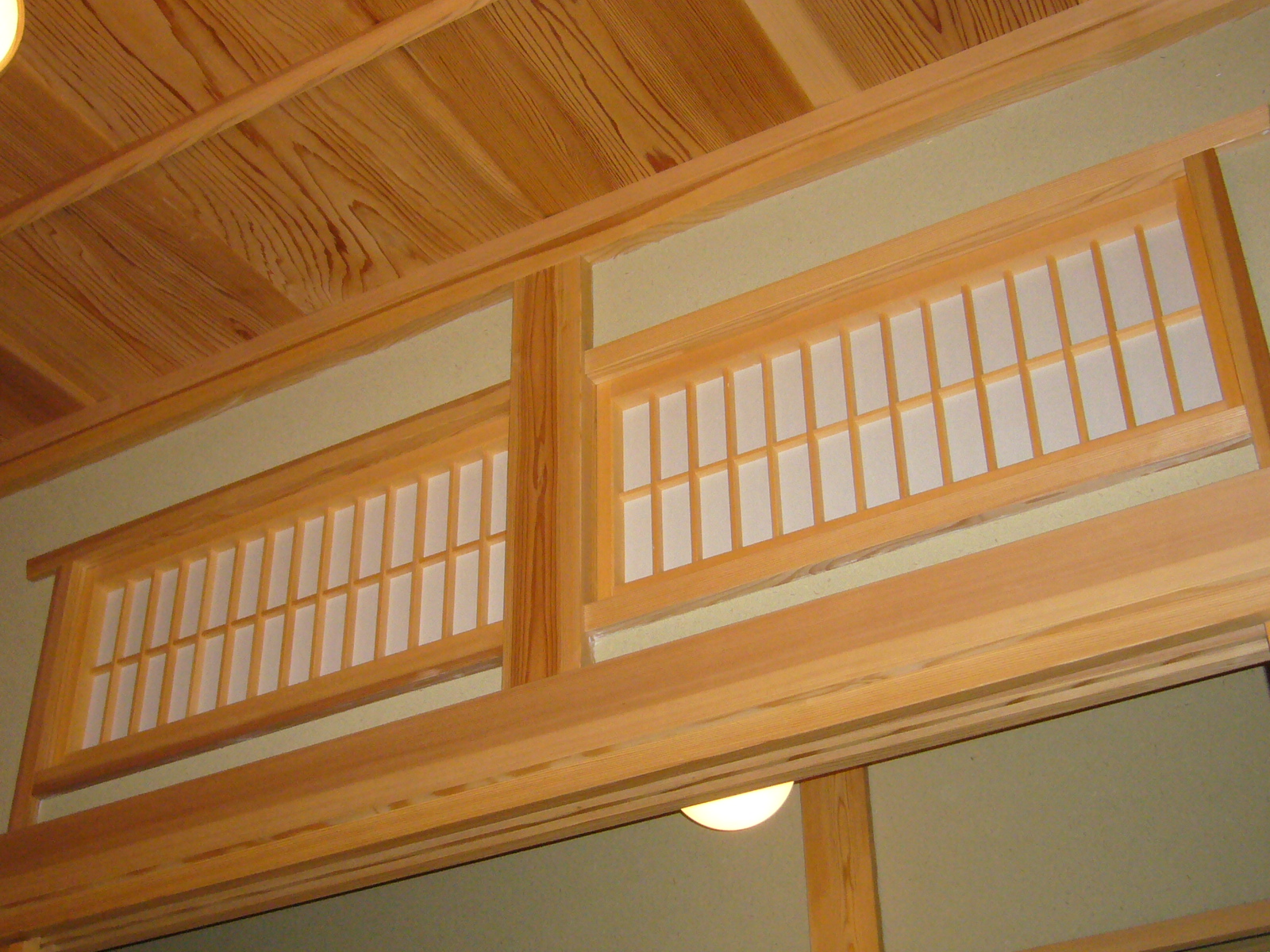
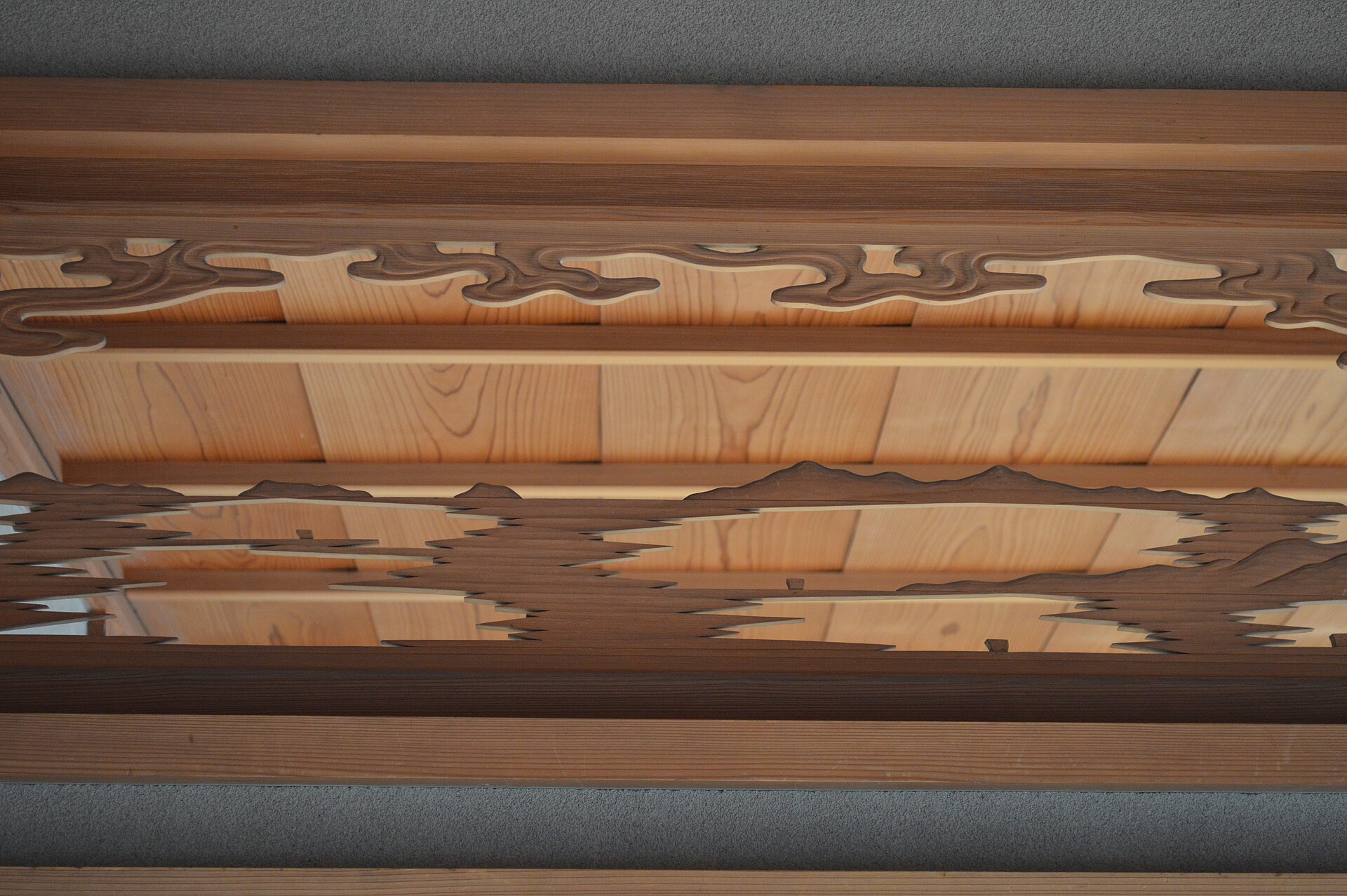
- Ranma 欄間
- Transom between kamoi and ceiling. May be kumiko, carving, or mixed. See photographs from Katori, Hakata Machiya Folk Museum, and Ishitani House.
- Shikii 敷居
- Threshold / sill groove for sliding fittings, counterpart to the kamoi.
- Shippō 七宝
- Overlapping-circle pattern; also a Buddhist treasure-list word. See goma / shippō.
- Shōji 障子
- Translucent sliding screen: frame, kumiko, washi.
- Sugi 杉
- Cryptomeria japonica, Japanese cedar. See Materials.
- Tategu 建具
- Architectural fittings (doors, screens, transoms). The trade that owns kumiko in historical practice.
- Tategu-shi 建具師
- Fittings carpenter. Odate’s apprenticeship category.
- Tsuitate 衝立
- Freestanding single-panel screen. Takenaka lists it as a kumiko application.
- Wagara 和柄
- Traditional Japanese repeating patterns (textiles etc.). Shares names with kumiko; is not kumiko.
- Washi 和紙
- Japanese paper. Shōji covering.