Pattern · 亀甲
Kikkō亀甲
“Tortoise shell.” In kumiko this is first a hexagonal jigumi, then a family of fillings that sit inside hex cells. The name is standard Japanese design vocabulary, used for textiles, crests, and armor of hexagonal plates.
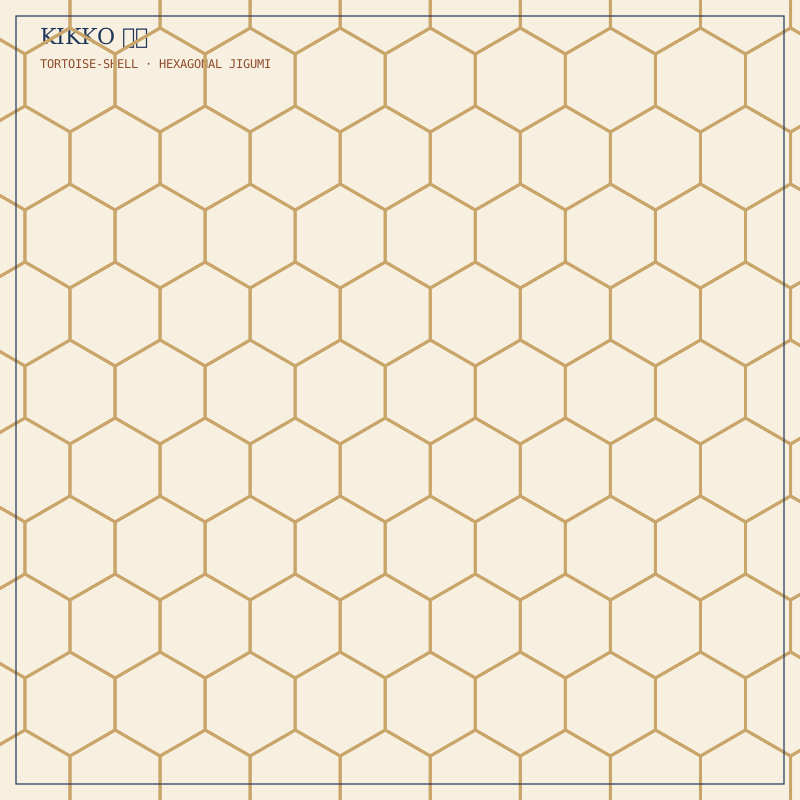
A regular hexagonal tiling and a triangular tiling are duals: the mitsukude joint (three strips at 60°) produces hex cells. That is why Yoshihara’s catalog files mitsukude, asanoha, goma, and shippō-kikkō together under “Kikkō Gumi (Tortoiseshell Lattice).” The family name is the grid.
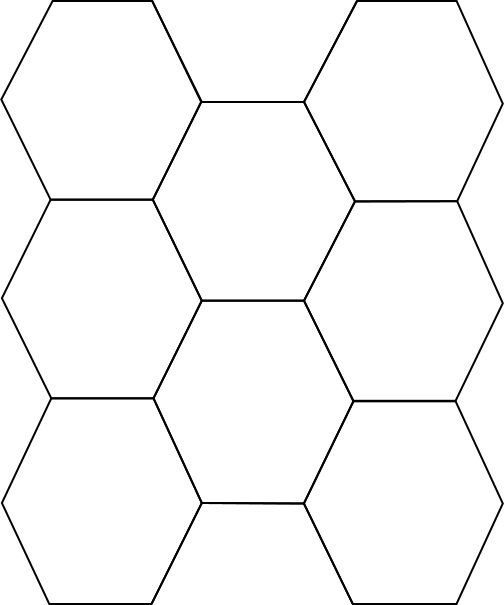
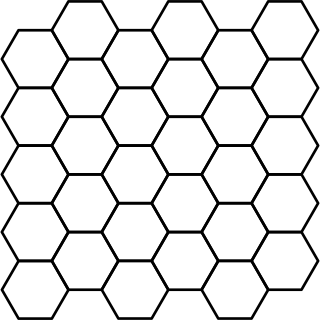
Empty hexes — kikkō as a plain honeycomb — are already a pattern. Fillings make the named variants. Tanihata lists tsumiishi-kikkō (“stacked-stone tortoise-shell”) and quotes the conventional couplet about cranes and turtles.
Armor called kikkō uses hexagonal plates. Family crests use the same outline (see the CC0 kikkō crest drawing). Shared geometry across crafts is normal in Japan.
Catalog variants
These names appear in Yoshihara’s English kikkō-gumi list, among others: mitsukude, kagome, asanoha, kasane-rindō, ume, yae-kagome, matsuba, rindō-asanoha, tsumiishi-kikkō, bishamon-kikkō, sakura-kikkō, shippō-kikkō, goma, goma-kuzushi.
Yoshihara Woodworks, Kumiko Designs. Retrieved 2026-09-05.