Translation notes

Hand, CNC, laser — only one of these is the method.

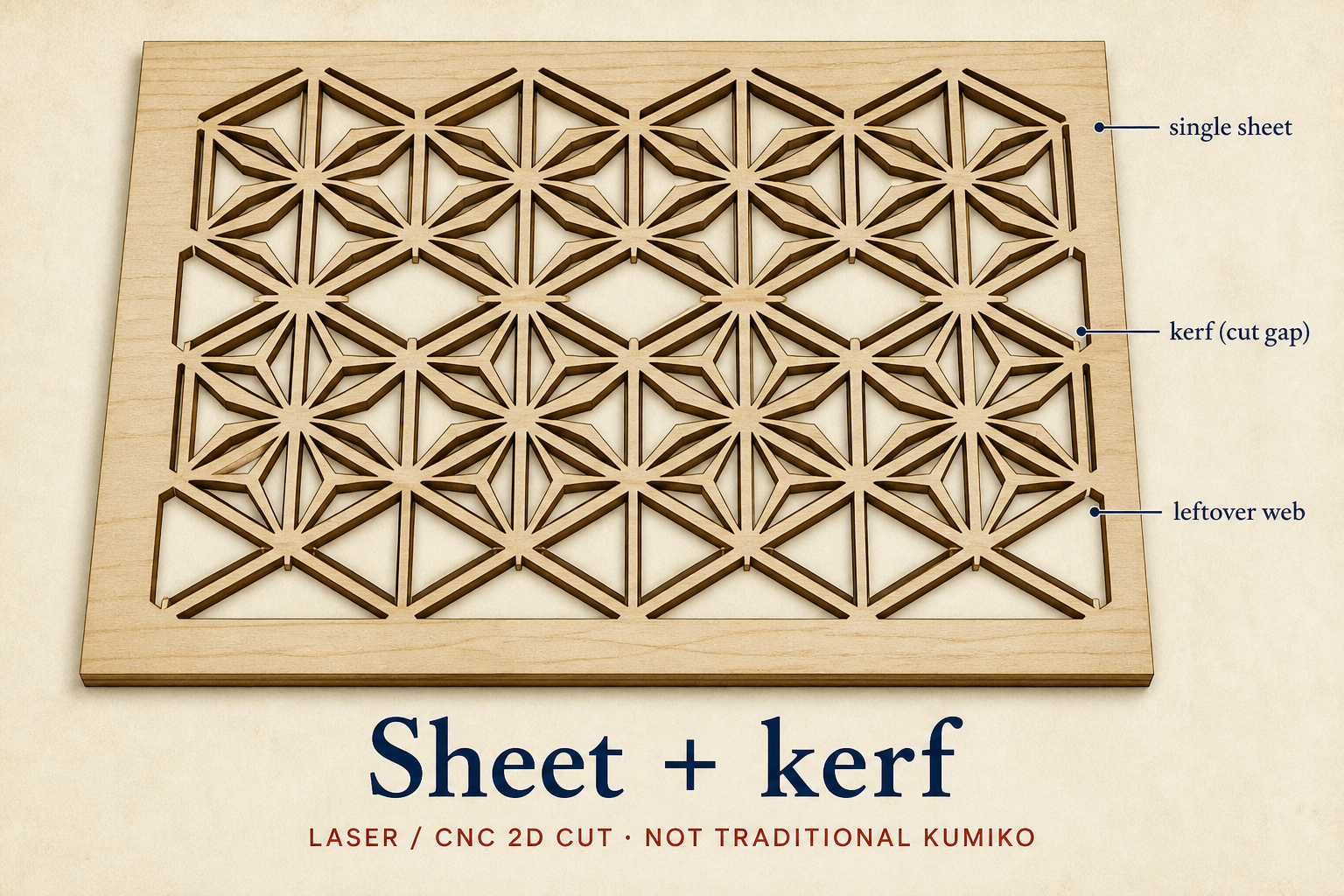
Traditional kumiko is interlocking strips. CNC can cut those strips. A laser (or a CNC) that cuts the picture of a pattern out of a sheet produces a lattice graphic. The graphic may be honest as decoration. It is not traditional kumiko.

Laser-cut sheets are not traditional kumiko: repeating an asanoha SVG in plywood does not assemble strips, does not groove a mitsukude, and does not hold by pressure. A sheet lattice is a graphic, not interlocking members.
Single plywood sheet with laser kerfs leaving a leftover web — sheet-cut lattice, not traditional strip kumiko
Sheet + kerf laser lattice (not traditional strip kumiko).

Method

Hand

Kanna, nokogiri, chisel, marking gauge, shop-made angle jigs. Strips ripped from straight-grained stock, grooved, fitted, assembled. Odate and King are the English-language door into this. Tanihata still lists hand adjustment among its factory notes even while running NC saws.

What you get: a panel whose members can be repaired piece by piece, whose joints read as joints in raking light.
Translation, if still strips

CNC (subtractive, strip-wise)

A CNC mill or a dedicated NC radial saw can cut grooves and angles in individual kumiko strips. Tanihata publicly describes NC radial saws dedicated to kumiko in a 1,200 m² factory. The assembly can remain hand work.

This is a translation of the method: the object is still a set of interlocking members. It is machine-assisted strip work, not an unchanged pre-industrial method.

Not the method

Laser / sheet CNC

A laser (or a CNC knife, or a mill in 2D pocketing mode) cuts through a sheet. The “joints” are kerf. There are no strips to replace. Grain does not run along members because there are no members. Plywood, MDF, and acrylic take this process well.

Sheet lattices appear as lighting baffles, cabinet-door graphics, models, and teaching silhouettes. A sheet lattice is a graphic of a pattern, not traditional Japanese kumiko.

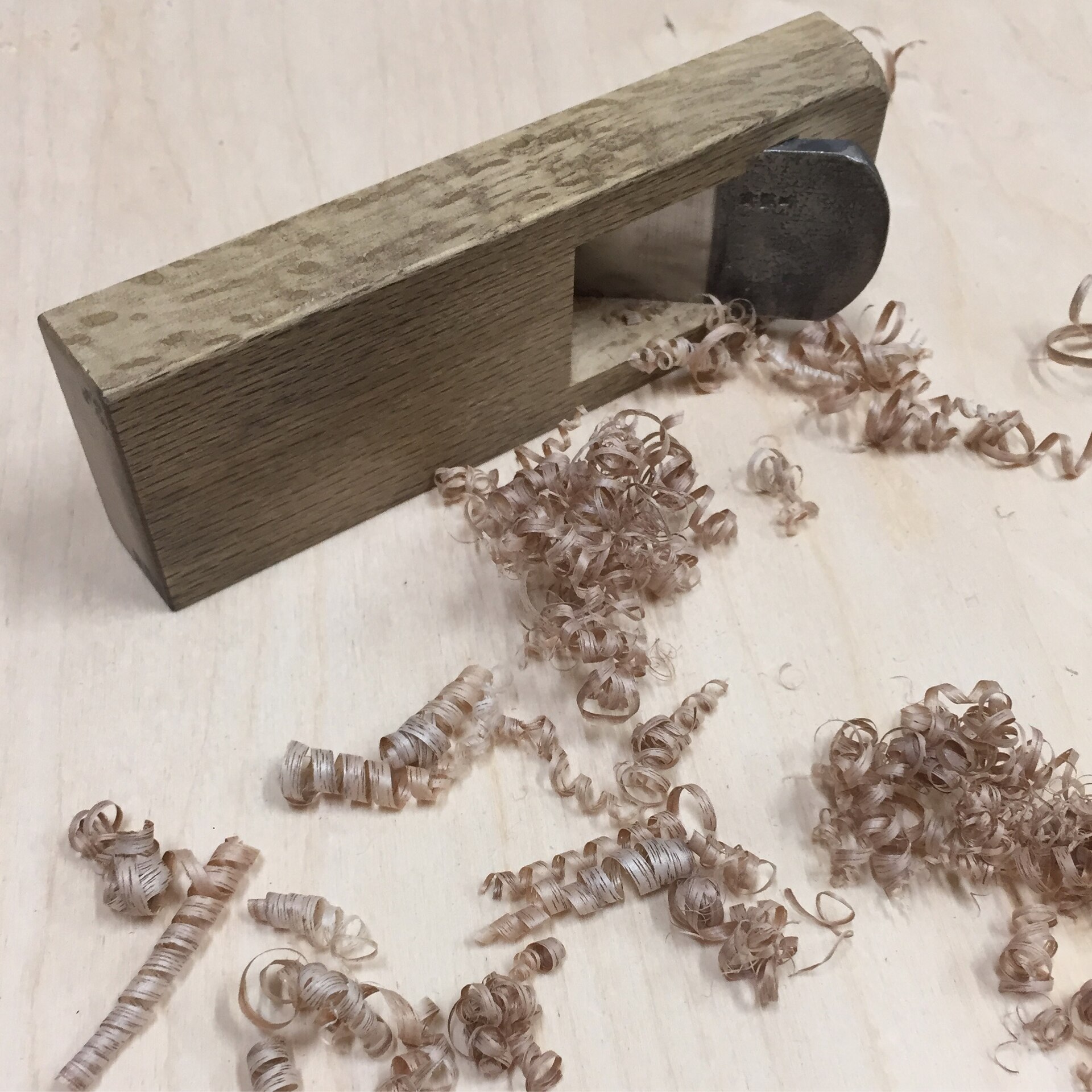
Japanese kanna handplane with a curl of wood shavings
Kanna with shavings. Terasaface, CC BY-SA 4.0. The plane is how strip thickness and fit are still judged.
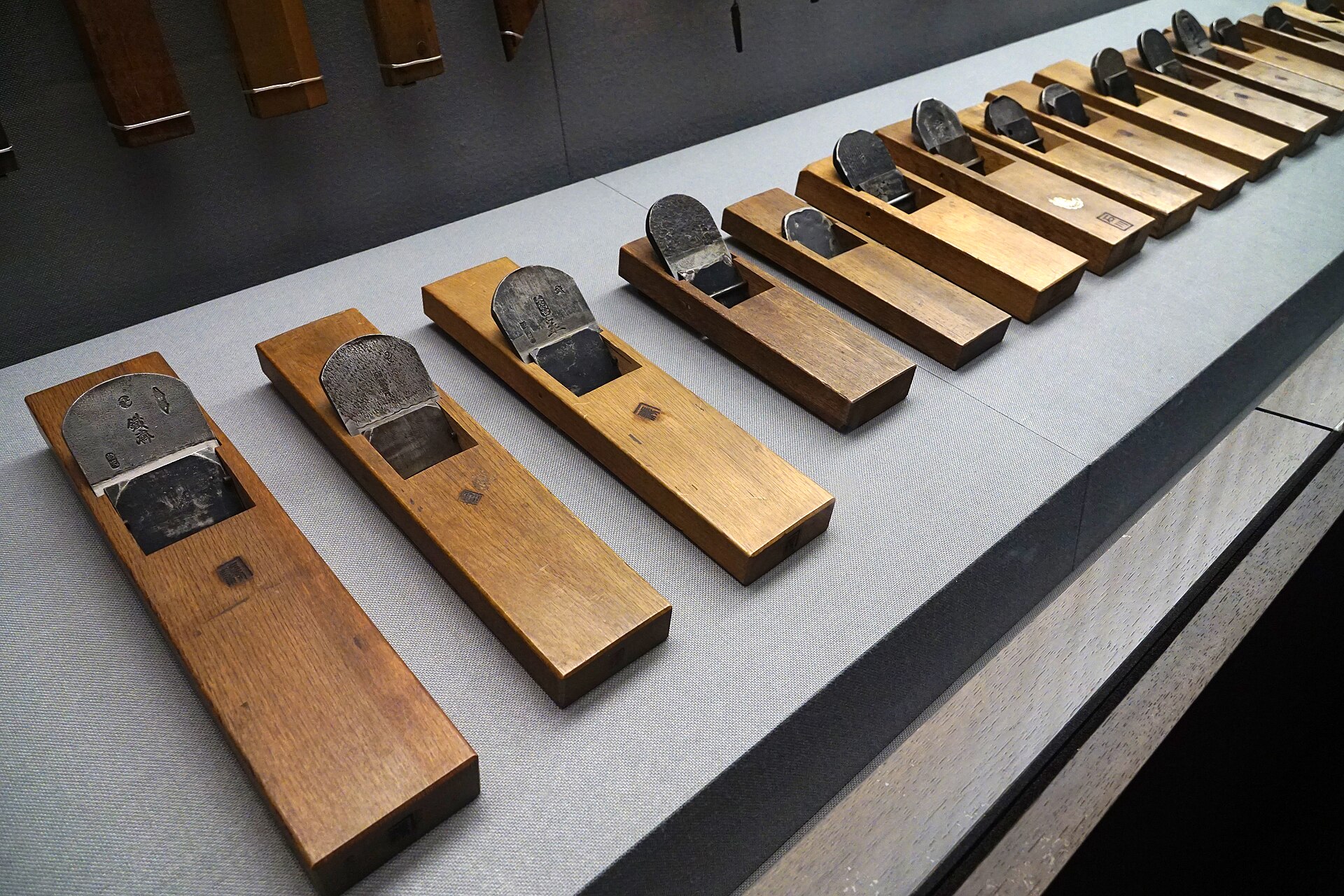
Japanese planes in the Takenaka Carpentry Tools Museum, Kobe
Planes at the Takenaka Carpentry Tools Museum, Kobe. 663highland, CC BY 2.5.

Strip joinery versus sheet graphics

Strip-joinery kumiko uses discrete strips with grain along each member. Intersections are grooved or housed rather than leftover material between kerfs. A filler can be tapped out and replaced. A planed cheek reads differently from a knife-kerf with burnt laser color. A sheet that only pictures asanoha is a picture of asanoha — a graphic of the pattern, not assembled strips.

Glue: modern makers, including those working by hand, sometimes glue. Traditional descriptions emphasize pressure.