Joint · 三つ組手
Mitsukude三つ組手
The three-way joint. Three strips meet at 60° intervals (the strips themselves are 120° apart as directions). The joint makes a triangular jigumi possible without glue at the node.
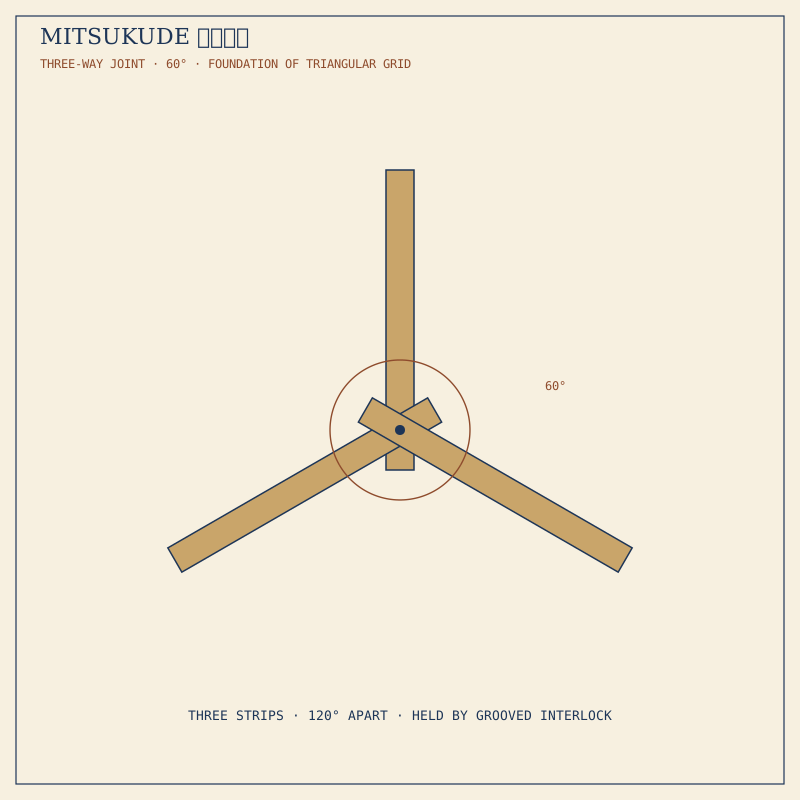
Yoshihara places mitsukude first under kikkō-gumi. Tanihata sells a pattern under the same name and, in trade copy, associates “three” with auspiciousness and with Greek geometry. The workshop fact is that the triangle is the basis of this family of kumiko, and the node is a three-way interlock.
Making notes from English shop practice (King and the Western jig literature that follows him): strips are grooved so that each piece half-laps or houses the others at the node; craft associations repeat accuracy on the order of a tenth of a millimeter. A sloppy node will not close a field of hexes.
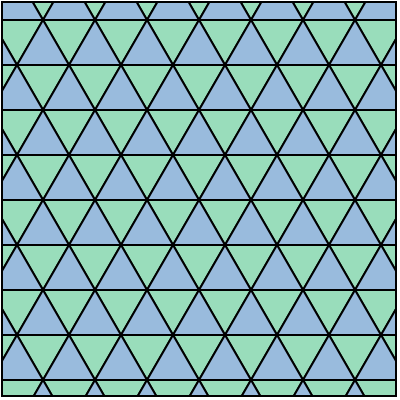
Mitsukude can be exhibited as a pattern — a field of empty triangles — without further filling. Asanoha, kagome, and many kikkō variants are what you add after the joint is sound.
CNC translation
A three-way joint can be CNC-milled: grooved strips, still assembled by hand. That remains a translation of the method. A CNC that pockets a triangular picture into a board, leaving a single sheet, has drawn mitsukude without performing it. The same strip-versus-sheet distinction applies. See Translation.