Two names · 胡麻 / 七宝
Goma and shippō are not the same pattern.
Both names appear in contemporary kumiko catalogs. Shippō is overlapping circles — the same motif textiles call shippō-tsunagi. Goma is a sesame filling, listed by Yoshihara inside the kikkō-gumi family. The two catalog names are not one pattern.
Shippō 七宝
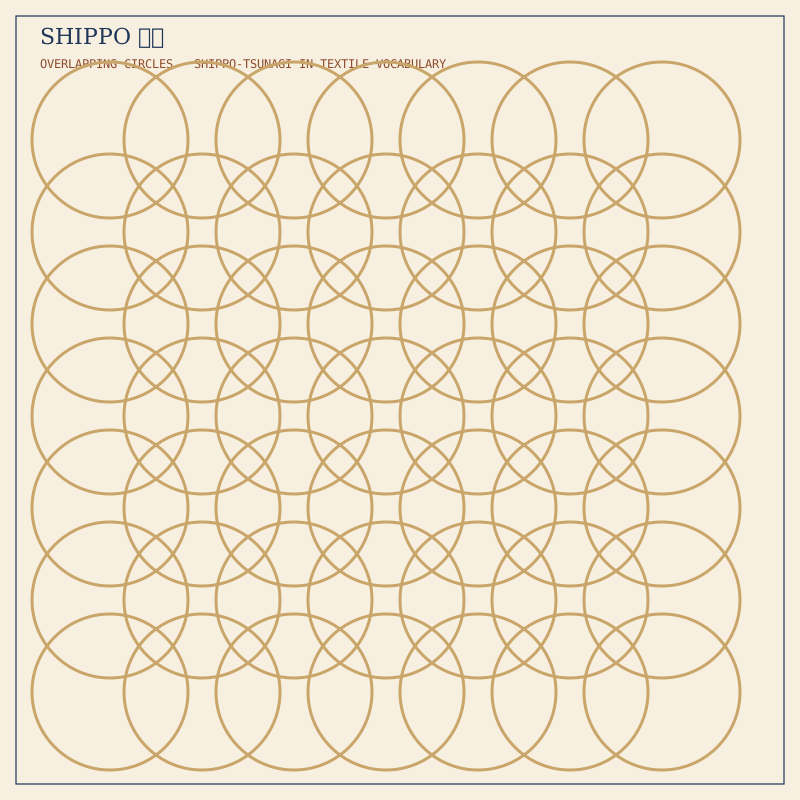
The word names the Seven Treasures in Buddhist vocabulary (lists vary; gold, silver, lapis, crystal, agate, coral, carnelian is one common set). In Japanese design, shippō / shippō-tsunagi is the pattern of overlapping circles whose intersections form a quatrefoil lattice. Tanihata’s product copy repeats the treasure-list and calls the linked circles auspicious.
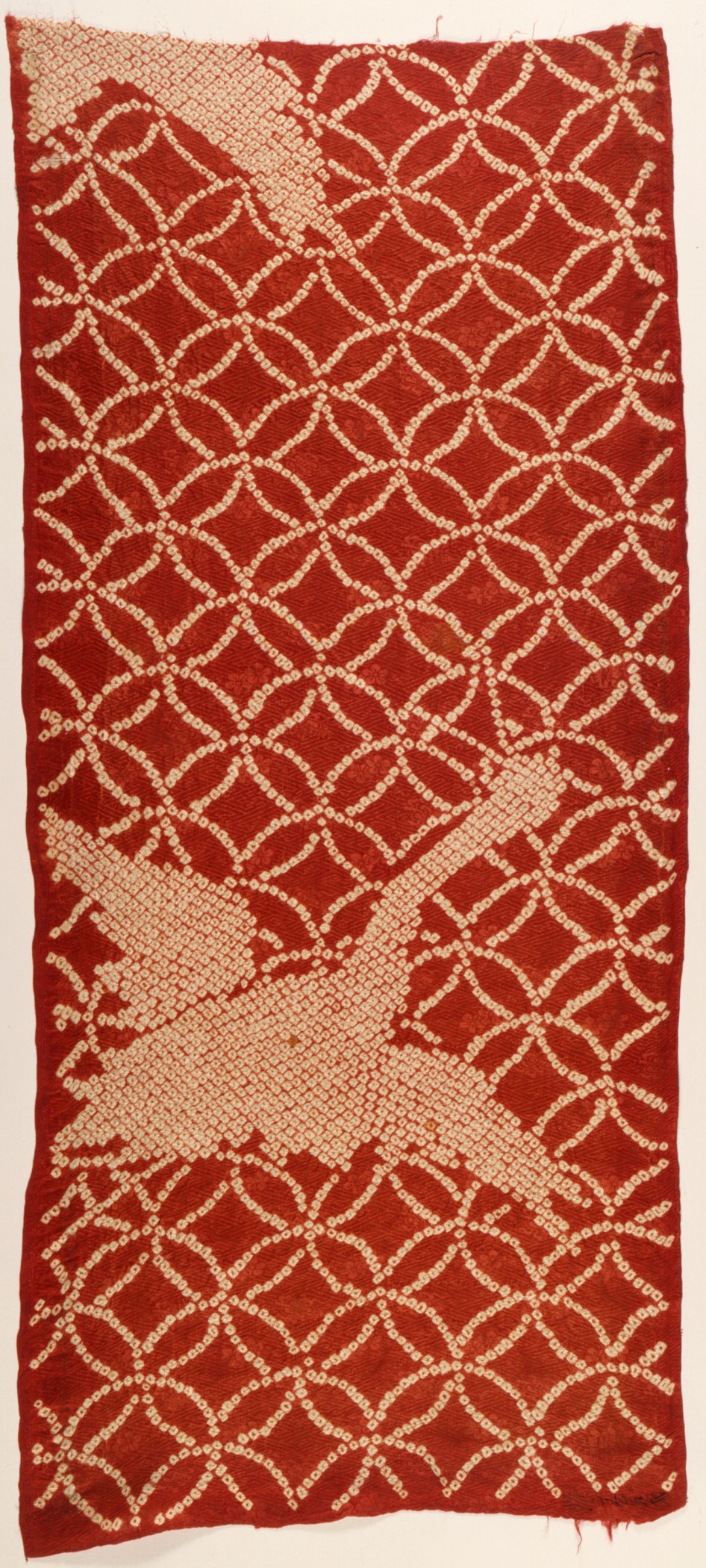
A LACMA kosode fragment with cranes on a shippō-tsunagi ground (public domain photograph) shows the textile version of the named circle lattice.
In wood, a true circle is expensive. Catalog shippō is built from many short members that read as rings. Tanihata notes that shippō (with seigaiha and fundō) “cannot be adjusted” in their sizing system — a practical constraint in that catalog.
Goma 胡麻
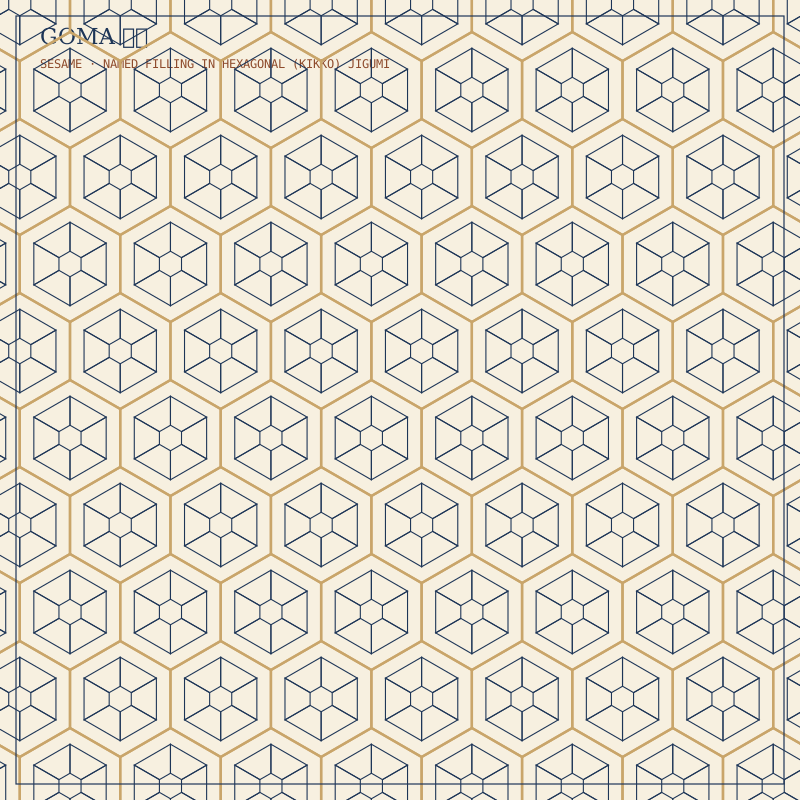
Yoshihara lists Goma and Goma-kuzushi (“distorted sesame”) under kikkō-gumi, alongside asanoha and shippō-kikkō — i.e., as a hex-family filling, not as a circle pattern. Tanihata also sells Goma as its own design. Secondary English blogs attach medical-sesame folklore (longevity, sixth-century import) that is not in the workshop catalogs.
The name means sesame; the catalog placement is hexagonal; published product photos show a dense speckled filling. The diagram is a schematic of that idea.
Goma and shippō are separate catalog names.