組子 · named lattices
Named patterns, interlocking strips.
Named Japanese lattice patterns used in tategu — fittings such as shōji and ranma — with notes on what CNC and laser actually translate, and what they do not.
Thesis
Named fillings in the jigumi.
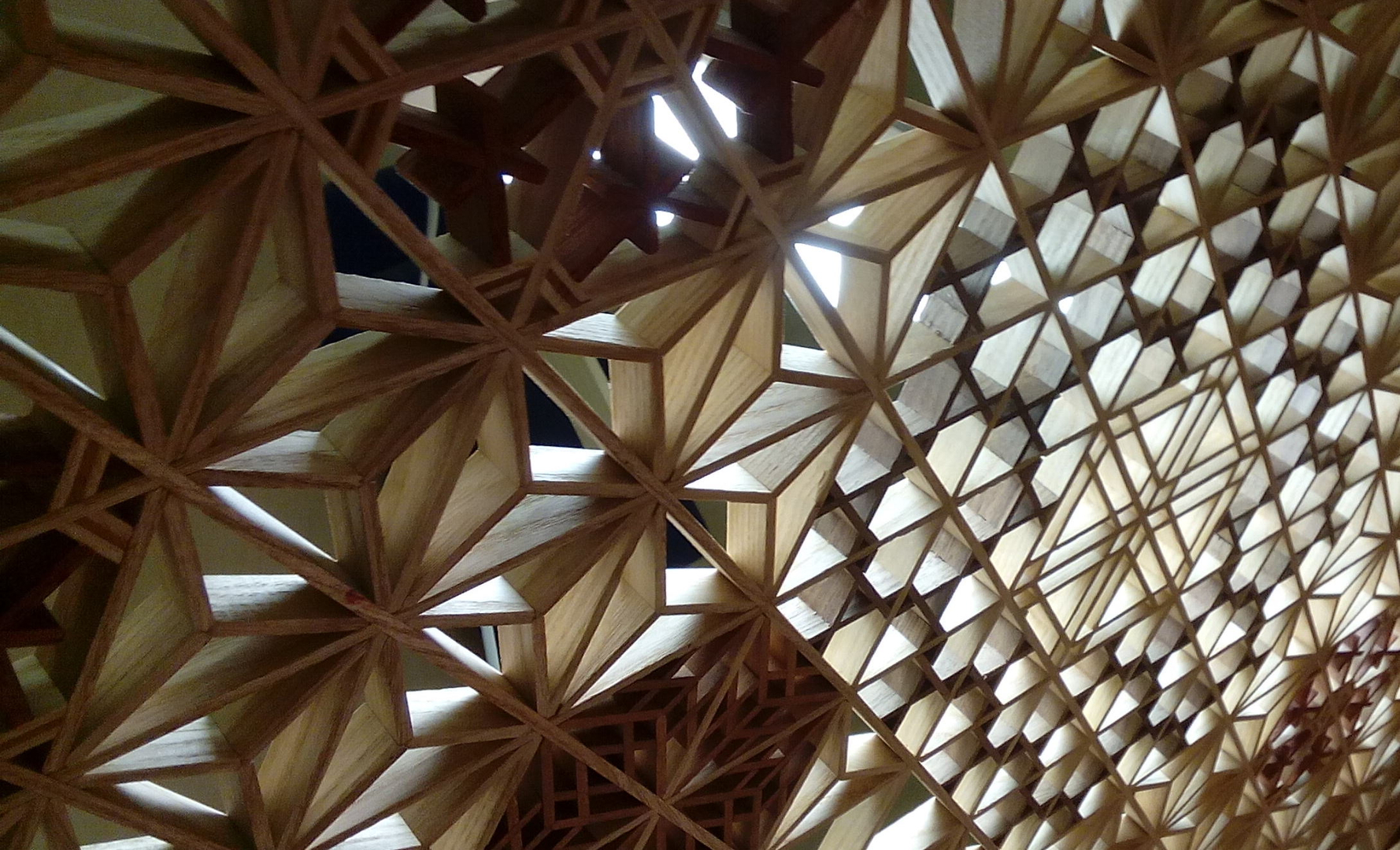
Kumiko (組子) is a method: thin wooden strips, grooved and fitted, assembled into a lattice. Named patterns — asanoha, kikkō, mitsukude, goma, shippō — are workshop names for particular fillings and joints. Those names appear in maker catalogs, tategu practice, and published books. Temple origin stories that cannot be sourced are not treated as fact. A laser-cut sheet is not traditional kumiko.
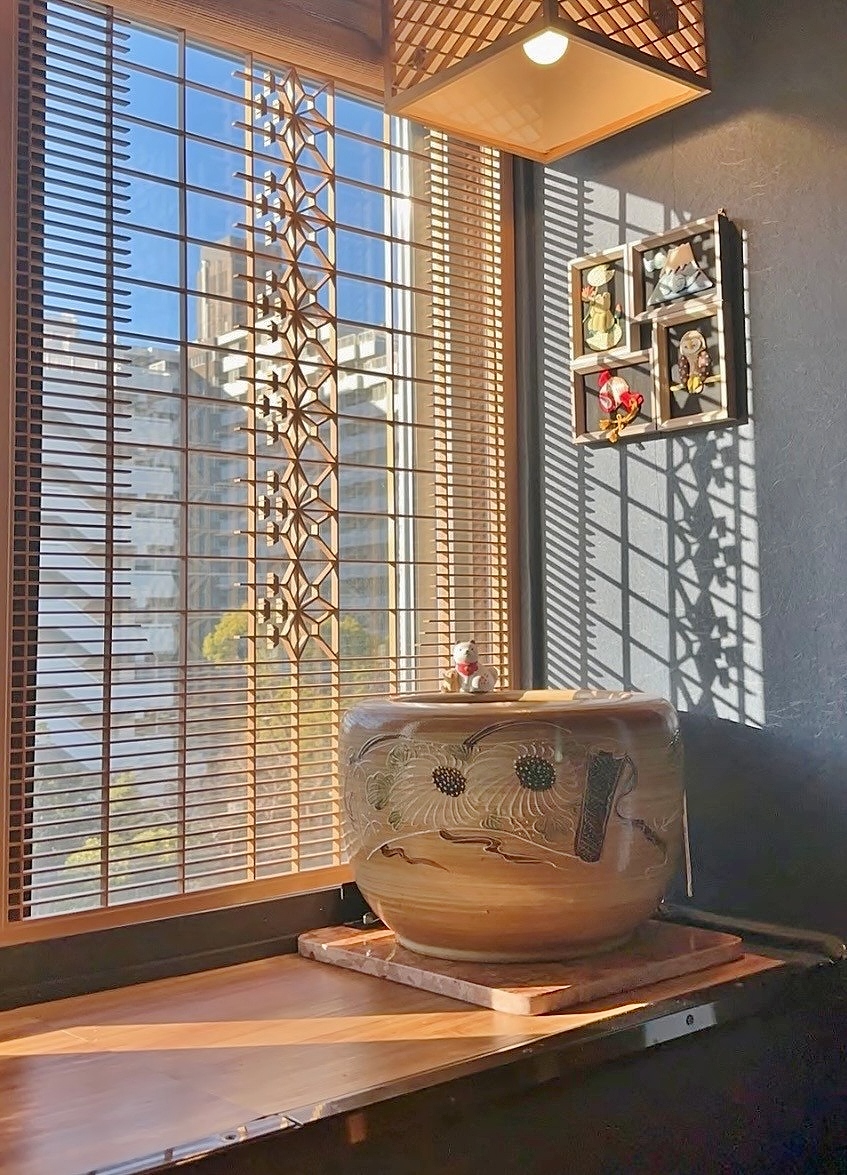
Trade copy often dates the technique to the Asuka period (6th–7th century). Museum labels sometimes say Kamakura. Regional craft notes point at later tool history — rip saws and jointing planes that make fine strip work practicable. Those claims do not agree. Early temple lattice is an ancestor of the idea of assembled muntins; the dense named fillings of Edo and later tategu are a later, better-documented craft. See Sources and What is kumiko.
Pattern names are shared with textiles (wagara), family crests, and armor. A hemp-leaf on a kimono is not a proof that a particular kumiko filling was invented in a particular century.
Named fillings
Four named fillings in detail.
Asanoha, kikkō, mitsukude, and goma/shippō. Maker catalogs list many more — seigaiha, izutsu, kaku-asa, tsumiishi-kikkō — as workshop names without invented origin stories.
Asanoha
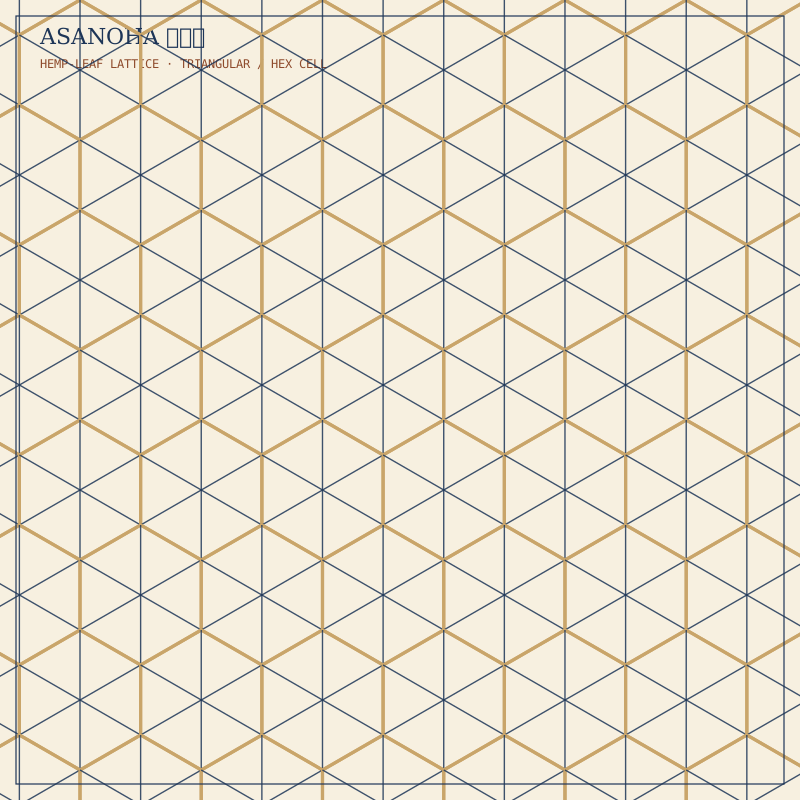
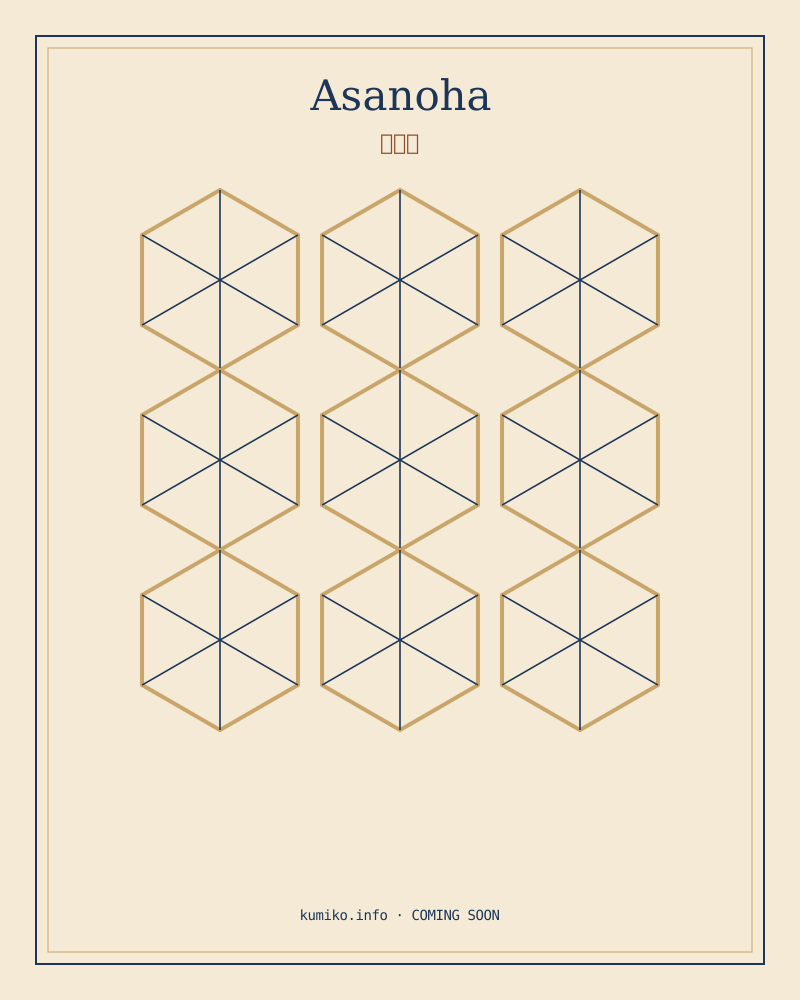
Hemp-leaf filling on a triangular or hexagonal cell. The most taught kumiko pattern in English-language books.
Kikkō
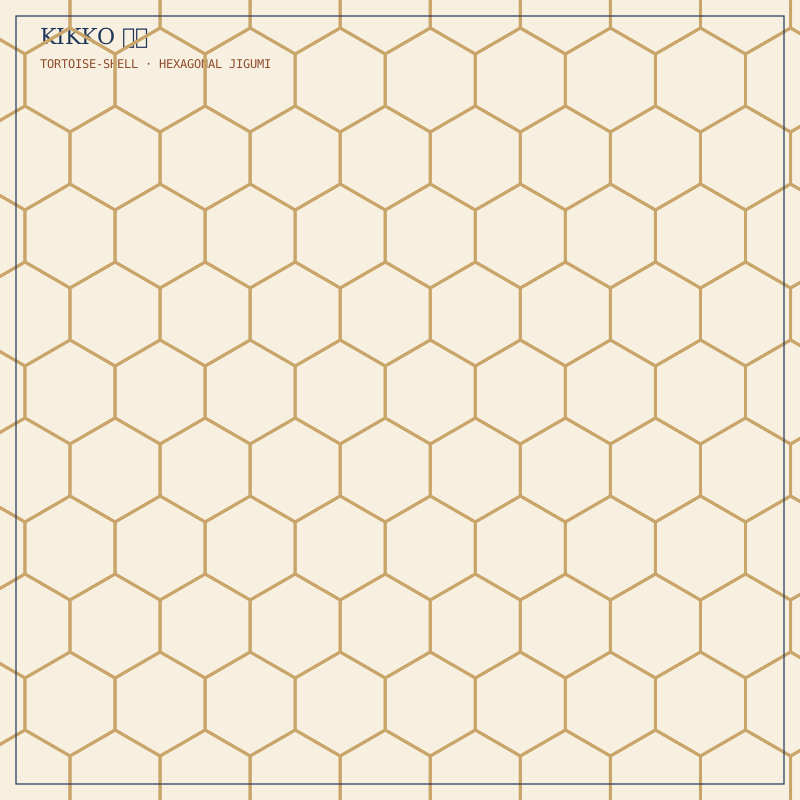
Tortoise-shell hex grid — the jigumi family that holds asanoha, goma, and many kikkō variants.
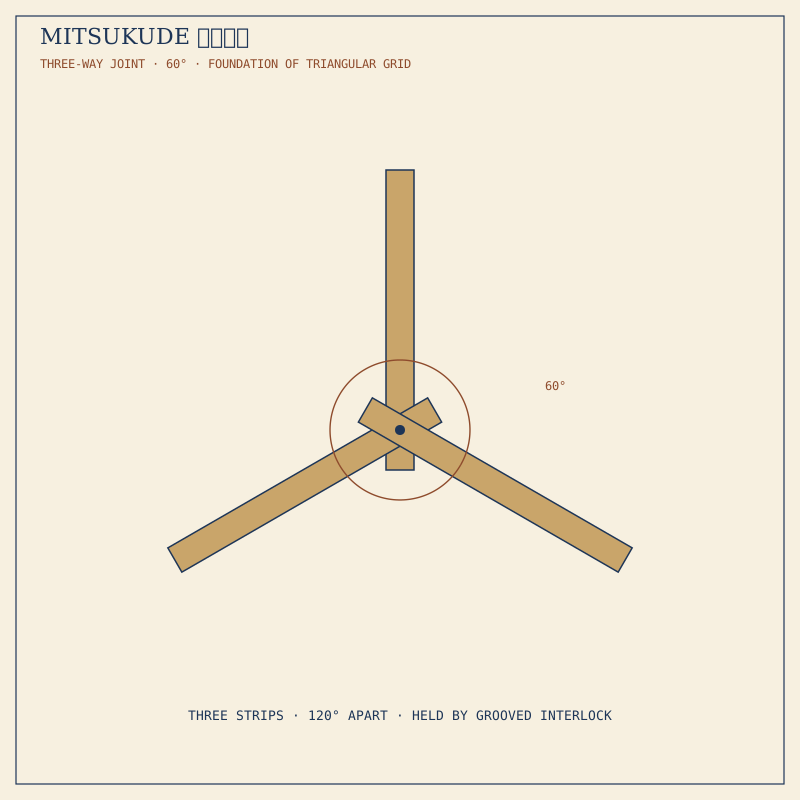
Mitsukude
The three-way joint. Not a decorative motif so much as the structural sentence of 60° work.
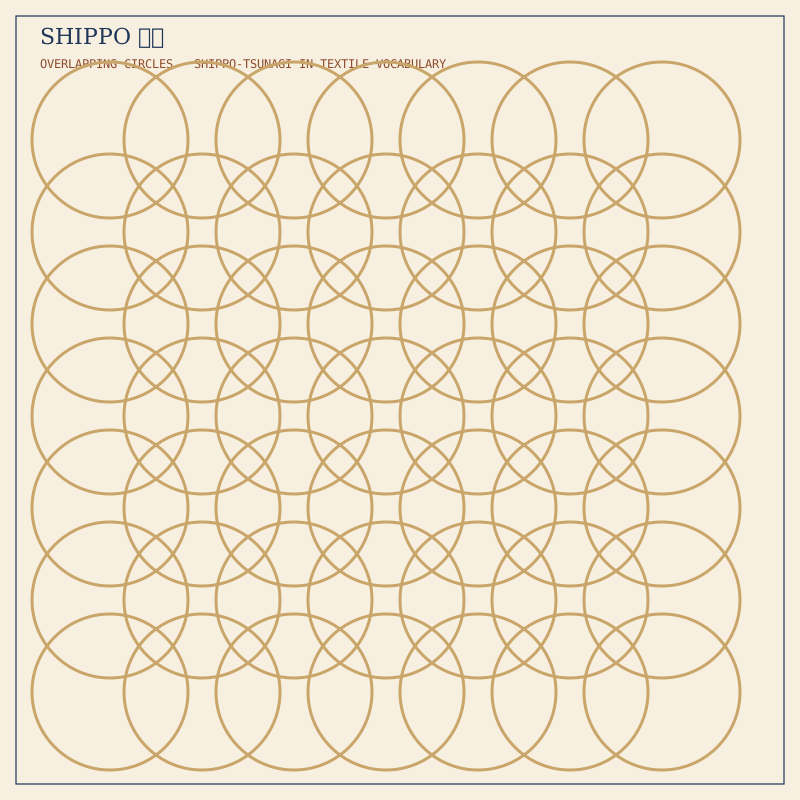
Goma / Shippō
Two catalog names, often conflated online. Sesame filling and overlapping circles are not the same rod layout.
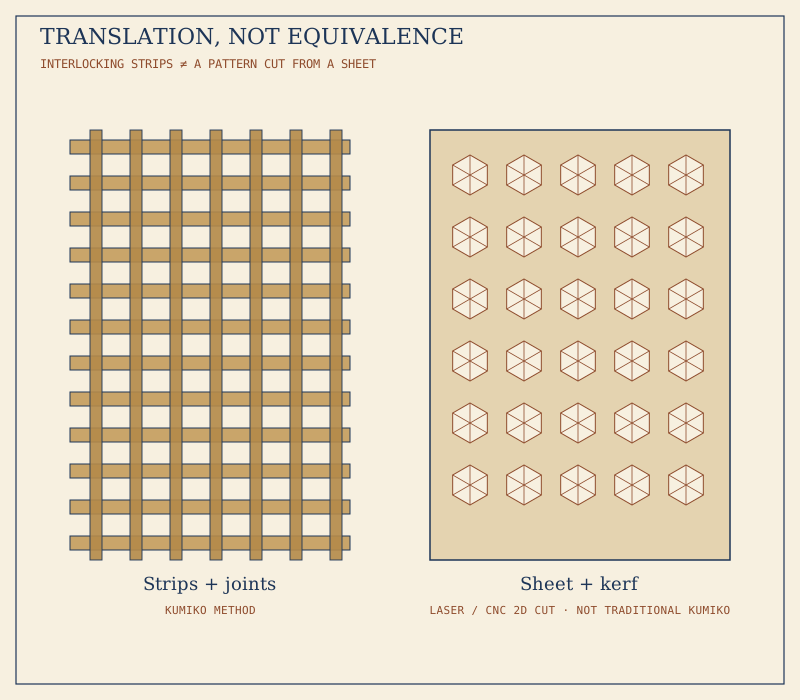
Workshop versus translation
A method, then a graphic of a method.
Hand kumiko is strips, grooves, and pressure. CNC can mill those strips and still be a translation of the method. A laser (or a CNC) that cuts the picture of asanoha out of a sheet of plywood is a lattice graphic. It can be beautiful. It is not traditional kumiko. Read the translation notes.
Index
Rooms.
Craft, geometry, materials, glossary, and sources.
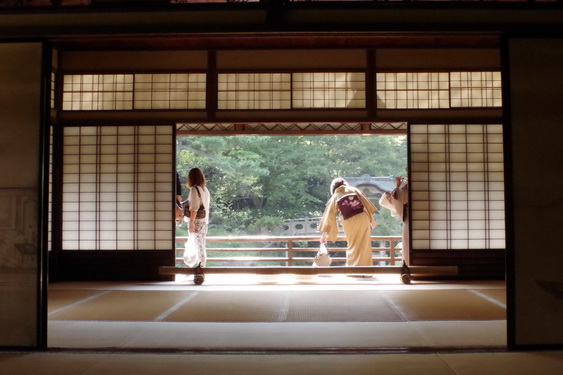
What is kumiko
Interlocking strips in shōji, ranma, and screens. Nails and glue are the exception, not the definition.
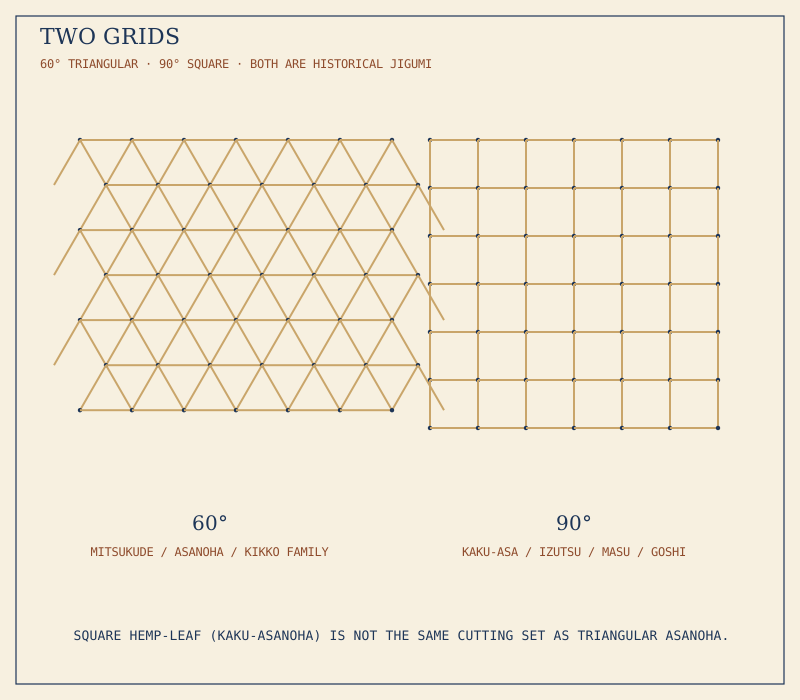
Geometry
60° versus 90°. Square hemp-leaf is not the same cutting set as triangular asanoha.
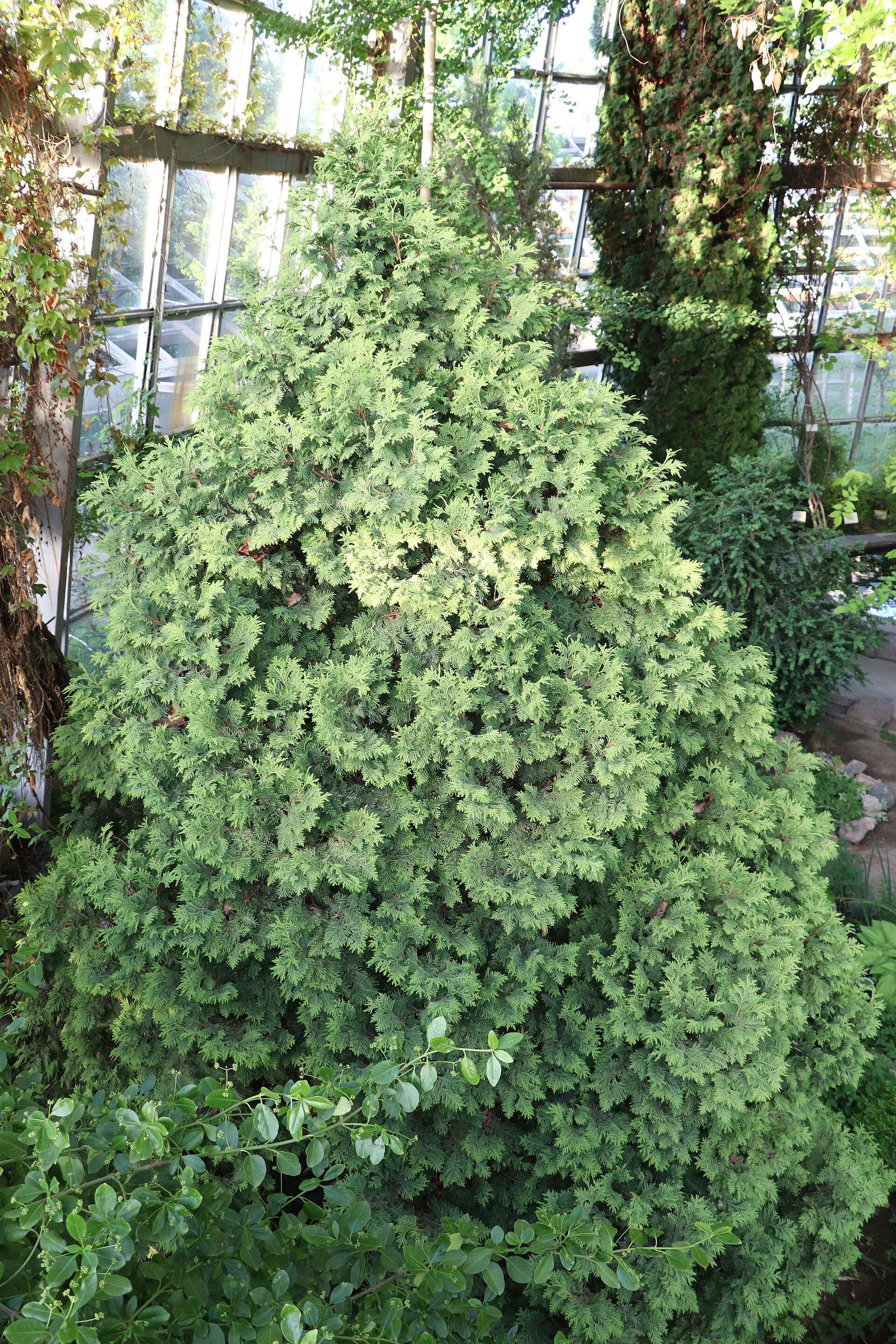
Materials
Hinoki, sugi, Kiso cypress — cited from makers, not invented brand lore.
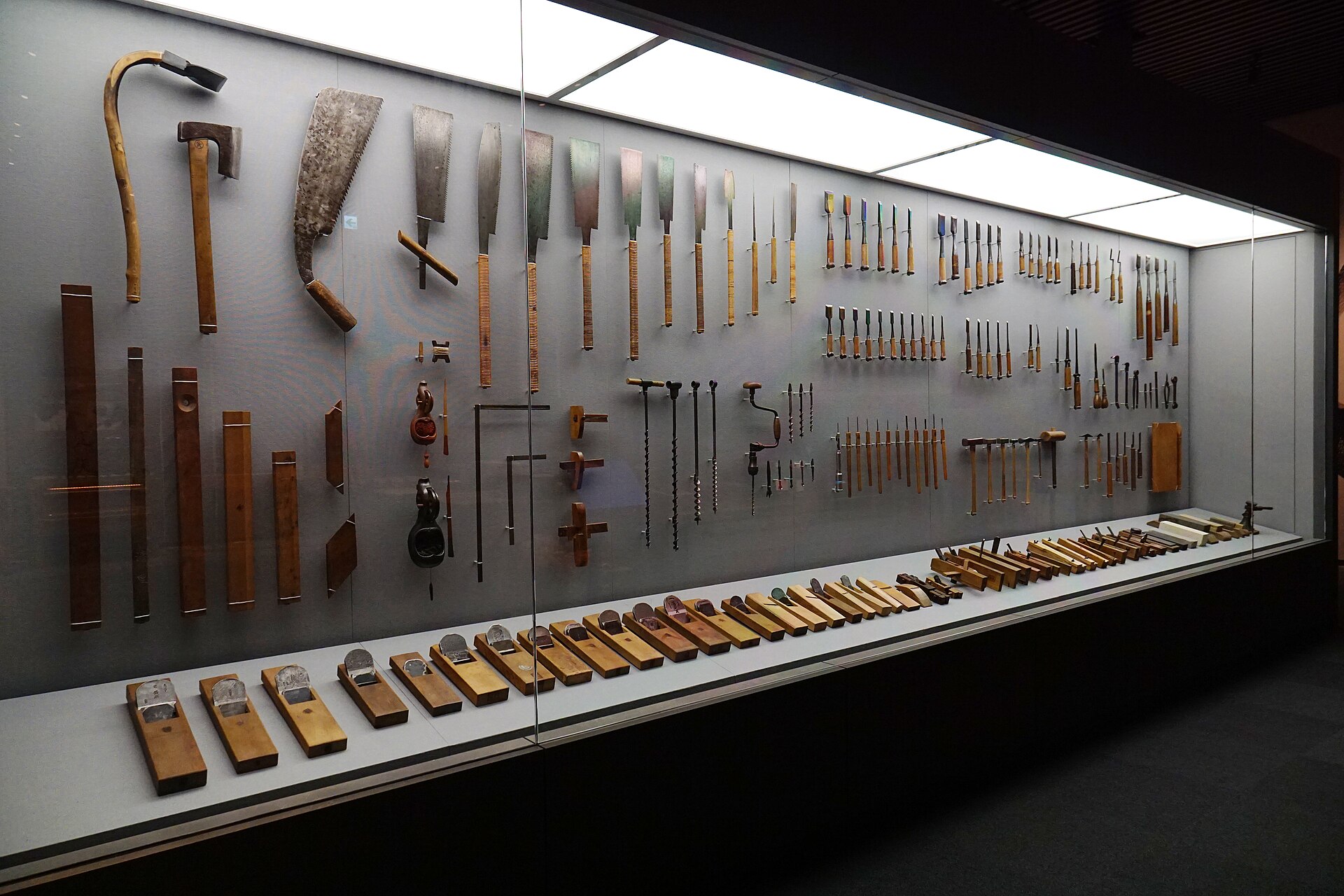
Glossary
Jigumi, mitsuke, kanna, tategu-shi — a dense word list.
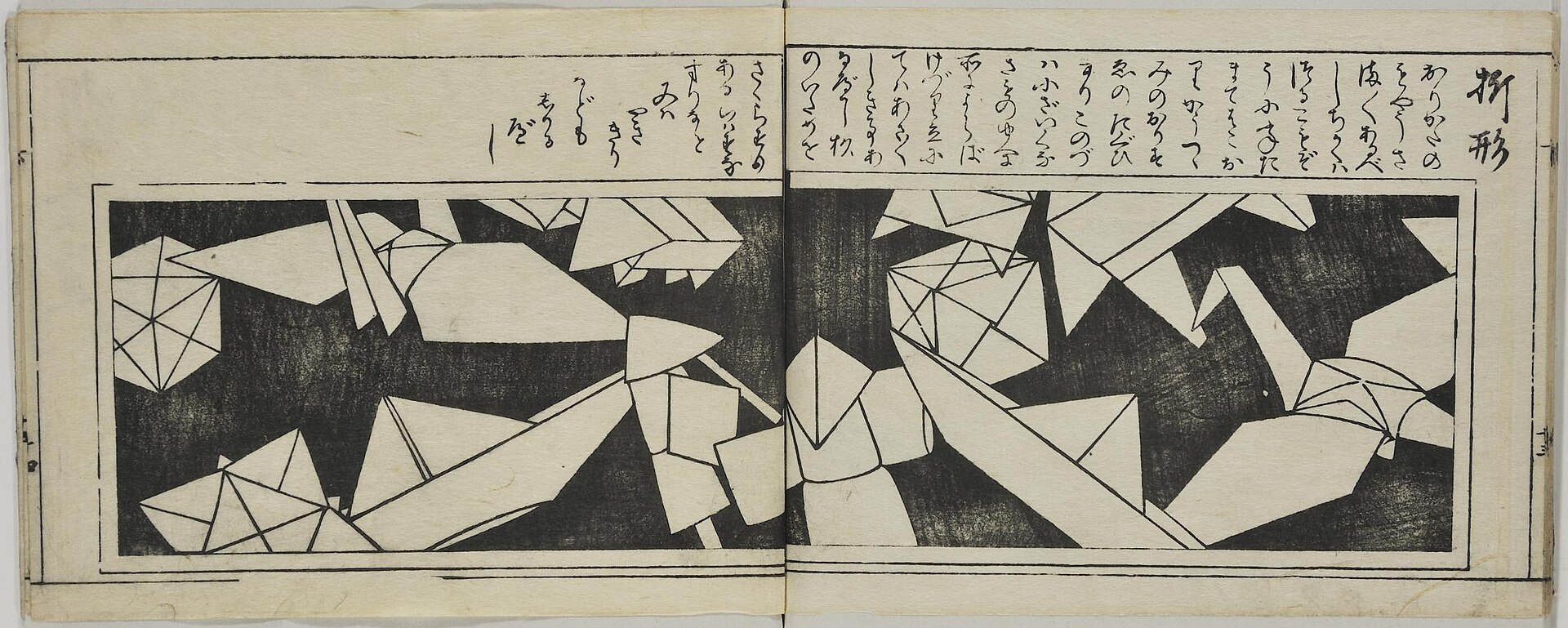
Sources
Museums, craft orgs, books that exist, Wikipedia where accurate.
Shop
Coming-soon cards. No fake dropship, no invented SKUs.